XYC Metalworks
How Architectural Metalwork Shapes the Doha Metro

A Manufacturer’s Perspective on High-Traffic Transit Stations.
In the realm of Doha Metro metalwork, urban rail systems are more than transportation networks—they are long-term public assets that must balance engineering performance, passenger safety, and architectural identity.
The Doha Metro, one of the Middle East’s most advanced metro systems, is a strong example of how architectural metal products play a critical role in shaping modern transit environments.
From vaulted station interiors to intricate metal finishes, the project demonstrates how precision metal fabrication supports both form and function in high-traffic public infrastructure.
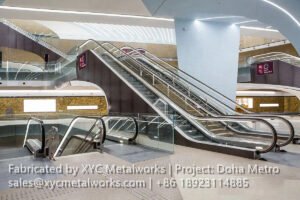
The Doha Metro: A Benchmark for Modern Transit Architecture
As a flagship project under Qatar National Vision 2030, the Doha Metro was designed to integrate modern transportation efficiency with regional cultural expression.
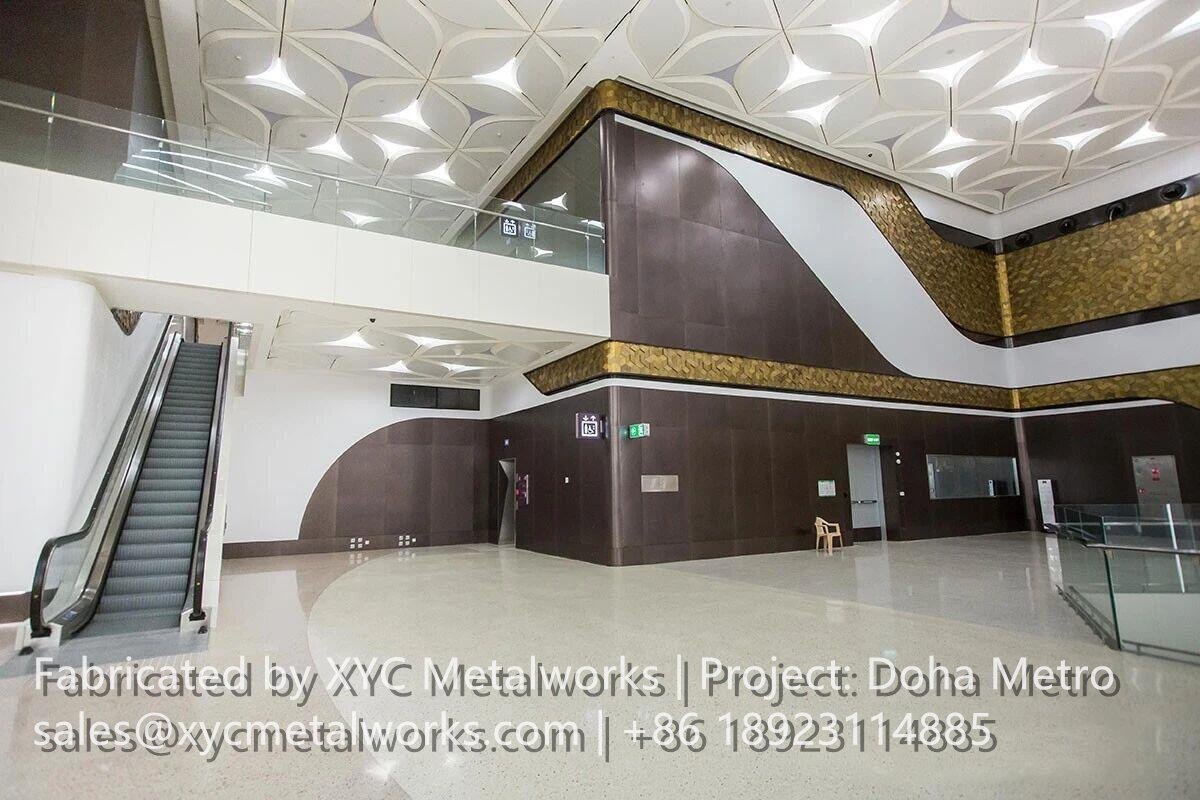
Station interiors feature large vaulted spaces, refined geometries, and decorative elements inspired by traditional Islamic patterns—requiring materials that are not only visually distinctive but also highly durable and safe for continuous public use.
This combination of architectural ambition and operational intensity places unique demands on metro station metal products.
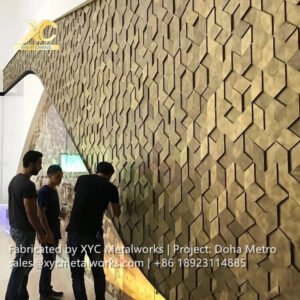
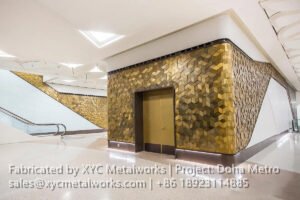
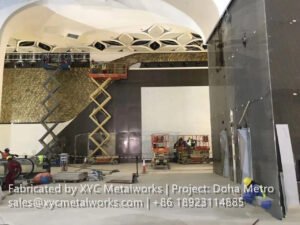
Why Doha Metro Metalwork Is Critical
Unlike commercial or residential buildings, metro stations operate under extreme conditions:
Constant high foot traffic
Tight safety and fire-rating requirements
Complex curved geometries and modular coordination
Long design life with minimal maintenance windows
In such environments, architectural metalwork—particularly stainless steel and aluminum systems—becomes a preferred solution due to its strength, precision, and longevity.
Metal Fabrication Challenges in High-Traffic Transit Projects
From a manufacturer’s perspective, metro projects introduce several fabrication challenges:
1. Precision and Tolerance Control
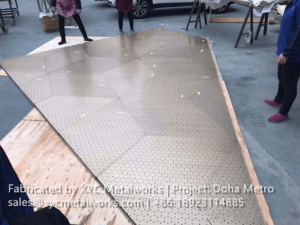
Vaulted ceilings, curved walls, and patterned panels require tight fabrication tolerances to ensure seamless on-site installation.
2. Durability and Surface Performance
Metal components must resist impact, wear, and corrosion while maintaining consistent surface appearance over years of use.
3. Fire Safety and Compliance
Materials and finishes must comply with strict fire-rating and public safety standards, especially in enclosed underground environments.
4. Installation Coordination
Prefabricated metal components must align precisely with structural, MEP, and finishing systems under demanding construction schedules.
Architectural Metal Solutions Applied in the Doha Metro
To meet these requirements, a wide range of custom metal fabrication solutions were applied throughout the Doha Metro stations:
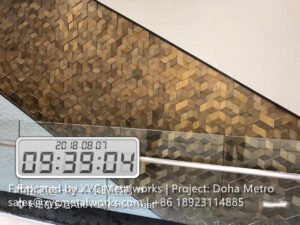
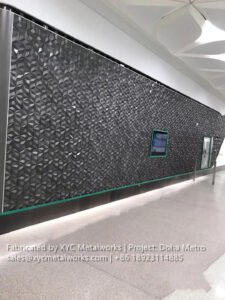
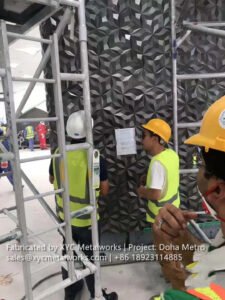
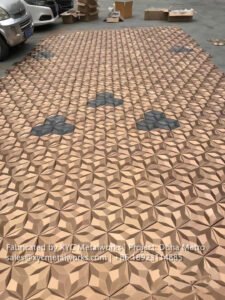
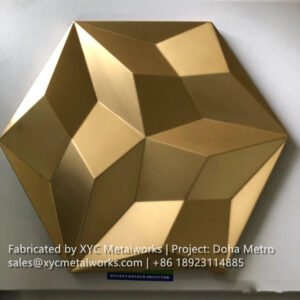
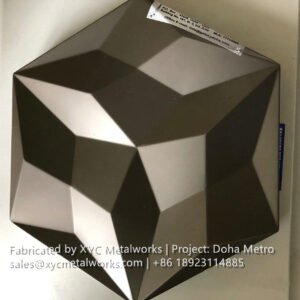
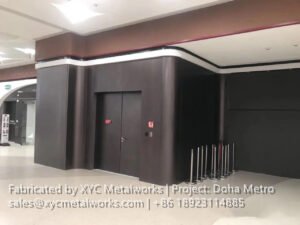
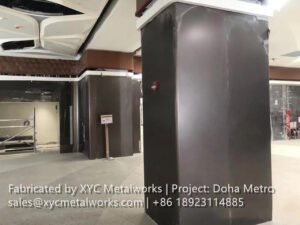
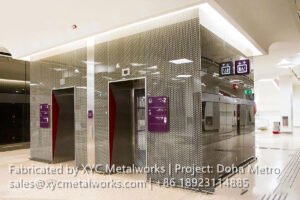
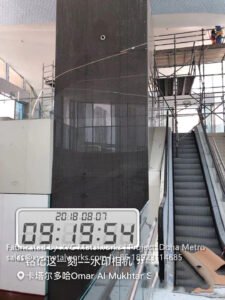
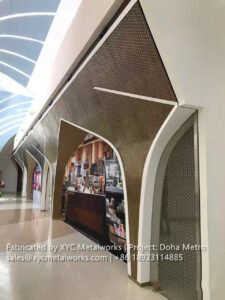
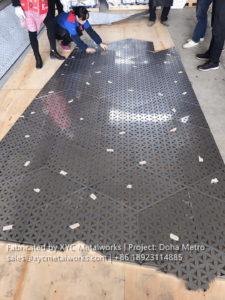
Stainless steel wall panels and metal cladding systems with 3D textures and decorative patterns
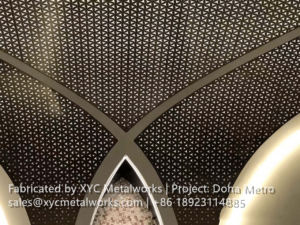
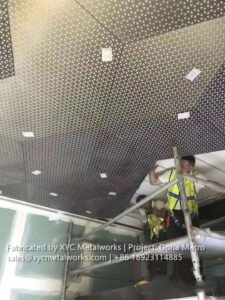
Perforated metal ceiling panels integrating lighting and acoustic functions
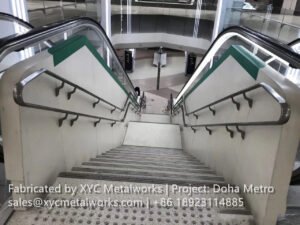
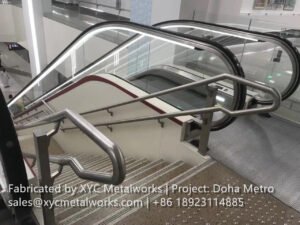
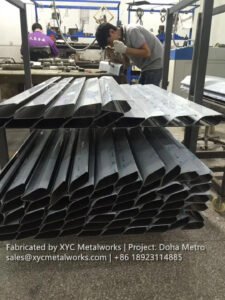
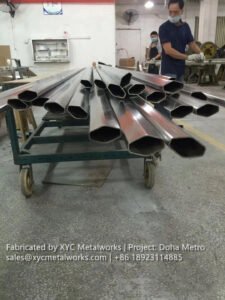
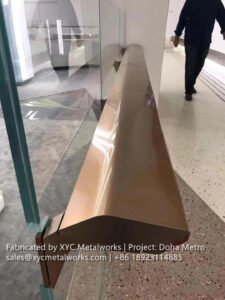
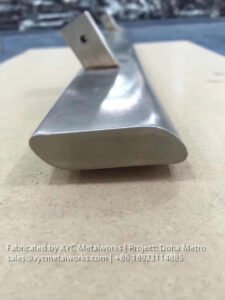
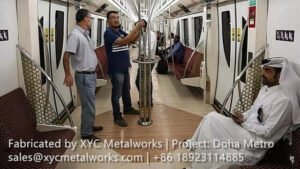
Stainless steel handrails and metal-glass balustrades, commonly using Grade 316L stainless steel for enhanced corrosion resistance
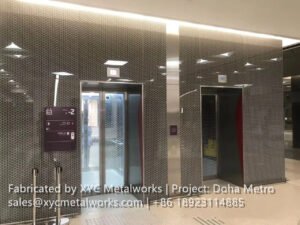
Laser-cut decorative metal screens and grilles combining ventilation with architectural expression
Custom station metal fittings, including access covers, signage frames, and tactile metal components.
Together, these elements contribute to a consistent architectural language across the metro’s Red, Green, and Gold Lines.
The Manufacturer’s Role in Metro Station Projects
In large-scale transit infrastructure, the role of a metal products manufacturer extends beyond fabrication alone.
Early coordination, material selection, and production planning are essential to ensure that architectural intent can be translated into manufacturable, install-ready components.
For metro stations, manufacturers must combine:
Advanced CNC fabrication capabilities
Experience with architectural stainless steel and aluminum
Strict quality control systems
Reliable production capacity for large-volume delivery
Long-Term Performance in Public Infrastructure
Years after commissioning, the Doha Metro continues to operate as a core part of Qatar’s urban mobility network.
The architectural metal components used throughout the stations demonstrate how well-engineered metal products can support long service life, safety, and visual quality in demanding public environments.
For architects, consultants, and project owners, this highlights the importance of selecting experienced metal fabrication partners for transit and infrastructure projects.
Conclusion
The Doha Metro illustrates how architectural metal fabrication contributes to the success of modern metro stations—supporting durability, safety, and architectural expression at scale.
From stainless steel panels and ceilings to custom metal fittings, the project underscores the value of precision manufacturing in high-traffic public transportation infrastructure.